The Trigger Cycle: Why Small Moments Become Big Conflicts
Tell me if this sounds familiar. You're having a normal conversation — then something small happens, and within minutes you're arguing about something much bigger than what actually happened.

You're having a normal conversation with your spouse, or your teen, or maybe even your boss. Nothing dramatic. Just everyday life. Then something small happens — a tone shifts, an eye roll, a sentence that lands a little sideways. It shouldn't be a big deal, but somehow it is.
You feel it almost instantly. Your chest tightens. Your thoughts speed up. What they said doesn't just land in the moment — it lands on something deeper. Maybe it makes you feel dismissed. Or unappreciated. Or controlled. Maybe it stirs up the fear that you're failing, or that you're not being heard, or that you're losing influence.
Whatever it is, it touches a story you already carry.
So you respond. Maybe your voice sharpens. Maybe you get defensive. Maybe you withdraw. You say something you didn't plan to say.
But now what you just said lands wrong with them.
They feel something too — criticized, boxed in, misunderstood, exposed. So they push back. Their tone rises. Their words get sharper. And just like that, the original issue — the dishes, the curfew, the calendar — fades into the background. Now you're both reacting to what it meant, not what was said.
You escalate because it feels necessary. They escalate because it feels necessary. And within minutes, you're arguing about something much bigger than what actually happened.
Later, when the room is quiet, you replay it and wonder how something so small turned into something so big.
I remember a morning at our breakfast table when this played out in real time. My 12-year-old walked in already carrying something heavy. When she saw her older sister wearing a pair of pants she thought were hers, it was like a match hit dry grass. Tears. Sharp words. An explosion that felt wildly disproportionate to the situation.
From the outside, it looked like a fight over clothing. But it wasn't about pants. Something deeper had been touched — something about fairness, identity, control, maybe even being seen. And if I'm honest, as the volume rose, something in me got touched too. My tone shifted. My patience thinned. Now we weren't just dealing with her reaction — we were locked in one together.
Within minutes, a normal weekday morning had turned tense and chaotic. And afterward, I found myself asking the same question I ask in so many other situations: how did something this small escalate this fast?
That's the Trigger Cycle. And if you've ever found yourself in it, you know how quickly it takes over, and how hard it is to make it stop.
What's actually going on?
When we get triggered by something our brains follow a predictable neurological sequence: Stimulus → Story → State. I know that sounds technical, but breaking it down helps.
Stimulus
A stimulus is something observable and concrete — the actual moment where the trigger begins. It might be a sentence that lands with more edge than you expected, a look that feels loaded, or a pause that stretches a little too long. On its own, the stimulus is simply data: sound waves, facial expressions, timing. But your brain does not receive it as neutral information. It immediately begins assigning meaning.
Story
Within milliseconds, your nervous system begins interpreting it. Before your rational mind has time to weigh context or intent, the emotional centers of your brain — particularly the amygdala — begin scanning for threat. Not just physical threat, but relational threat. Am I being rejected? Am I losing control? Am I being dismissed? Am I failing here?
That interpretation becomes a story.
If you're a parent and your teen has ever said "Whatever" while ignoring what you just told them, you may know what I'm talking about. As if on autopilot, your brain starts interpreting this stimulus and tying it to a story. The external event is small; the internal meaning is not. Because the story our brains begin connecting to the stimulus are often tied to hurts and hangups. Tender spots in our souls.
State
Once the story forms, your body shifts into a state that matches it. Your amygdala calls your fight, flight, or freeze response into action. Your heart rate increases. Your breathing changes. Muscles tighten. Stress hormones like cortisol rise, preparing you to defend, withdraw, or regain control. At the same time, activity in the prefrontal cortex — the part of your brain responsible for measured reasoning and thoughtful response — decreases. You are not just thinking differently in that moment; you are physiologically different.
And here is where the cycle becomes mutual.
Your state does not stay contained inside you. It shows up in your tone, your posture, your facial expression, your pacing. You may lean forward with intensity. You may become sharp and corrective. You may go quiet and emotionally distant. Whatever form it takes, your reaction becomes the next stimulus for the other person.
Their nervous system now begins the same sequence: stimulus, story, state. And you're looped together.
They interpret your tone. They assign meaning to your posture. They feel something shift. Their body responds. And before either of you consciously chooses escalation, two nervous systems are reacting to perceived threat. Your reaction confirms their story. Their reaction confirms yours. What began as a small moment now feels disproportionately large.
You were just talking about the calendar or grades or a project and then all hell broke loose. No one typically enters these conversations intending to spiral. But when interpretation outruns awareness and physiology outruns reflection, the cycle can take over before either person realizes what is happening.
Why It's So Hard to Break
If the Trigger Cycle is so predictable, why does it feel nearly impossible to stop once it starts?
Because by the time you realize what's happening, your nervous system is already in motion.
The human brain is designed for speed, not accuracy. When something feels threatening — even relationally threatening — the emotional centers of the brain activate before the rational centers have time to evaluate the situation. The amygdala does not pause to ask whether the eye roll was about you or about algebra homework. It simply asks, Is this safe? And if the answer feels like no, it mobilizes your body accordingly.
That mobilization feels urgent. Necessary. Justified.
In those moments, your reaction doesn't feel like overreacting. It feels like protecting something important — your dignity, your authority, your competence, your connection. And because the body is now flooded with stress hormones and heightened arousal, stepping back feels counterintuitive. Your physiology is preparing you to move toward or away from the perceived threat, not to sit calmly and analyze it.
There's another layer that makes it even harder: the cycle is self-reinforcing.
Every time you react in a protective way and the other person escalates, your original story feels confirmed. If you already carried a quiet fear of being dismissed, their sharp tone becomes proof. If they already carried a fear of being controlled, your intensity becomes confirmation. The brain loves confirmation. It strengthens neural pathways that say, "See? I was right to protect myself."
Over time, those pathways become efficient. Automatic. Familiar.
And what is familiar often feels true.
That's why the Trigger Cycle doesn't feel like a pattern at first. It feels like reality. It feels like the other person is the problem. It feels like the circumstances justify the response. From inside the cycle, you don't experience yourself as reactive — you experience yourself as reasonable.
Which is precisely why breaking it requires more than willpower. By the time you are trying to "be calm," your nervous system has already decided that calm is unsafe.
That doesn't mean you're broken. It means you're human — and wired to protect what matters to you.
You're not crazy. You're conditioned.
Where Faith Enters the Picture
If you follow Jesus, this is where things get even more important.
Because the Trigger Cycle is not just psychological — it's spiritual.
Scripture is honest about the gap between who we want to be and how we sometimes show up. Paul writes about doing the very thing he doesn't want to do. James talks about the tongue setting a forest on fire. The Bible never pretends that self-control is automatic.
But it also doesn't shame us for our wiring.
"Above all else, guard your heart, for everything you do flows from it."
— Proverbs 4:23Long before brain scans and stress hormones were measured, the biblical writers understood that something internal precedes something external.
What modern neuroscience calls stimulus, story, and state, Scripture often describes in terms of the heart. We do not react randomly. We react from what is already forming inside us.
And here's the hopeful part: faith does not bypass our humanity — it redeems it.
God is not surprised by your nervous system. He is not frustrated that you have patterns. He is not waiting for you to simply "try harder." The Spirit's work in us is not behavior modification on the surface; it is transformation at the level of the heart — the place where stories are formed and meanings are assigned.
When you begin to understand your Trigger Cycle, you are not moving away from faith. You are moving toward honesty. Toward humility. Toward the kind of self-awareness that allows the Spirit to actually reshape you from the inside out.
Growth in Christ is not pretending you're calm. It's learning to notice what gets stirred in you and bringing that into the light.
The goal is not perfection. It's awareness, surrender, and slow transformation.
And that changes everything.
Where We're Headed
This is why I'm writing here.
I've sat in too many living rooms, too many counseling conversations, too many quiet car rides after arguments where good people felt confused by their own reactions. I've felt it in my own home. I've watched capable leaders, devoted parents, and committed spouses get caught in patterns they genuinely hate — and not know how to interrupt them.
We don't need more shame. We need language. We need understanding. We need a repeatable way to see what's happening beneath the surface so we can respond differently.
That's where this blog is going.
In the weeks ahead, I'm going to unpack the most common protective patterns that drive the Trigger Cycle, how early stories shape present reactions, and what it actually looks like to slow the sequence down in real time. We'll talk about how to recognize your state before it takes over, how to repair when you don't get it right, and how to build homes, teams, and relationships that don't run on fear.
I'm passionate about this because I believe most of our conflict is not a character flaw — it's an unexamined loop. And loops can be broken.
If this resonated with you, subscribe. Share it with someone you love.
And next week, we'll start identifying the specific patterns that may be running the show in your life.
You're not stuck. You're not crazy. You're not beyond growth.
But you may be looping.
Let's break it.

Keep in Touch
Get weekly insights on faith, family, and purpose delivered straight to your inbox. Plus, be the first to know about new resources and the upcoming book.
No spam, ever. Unsubscribe anytime.
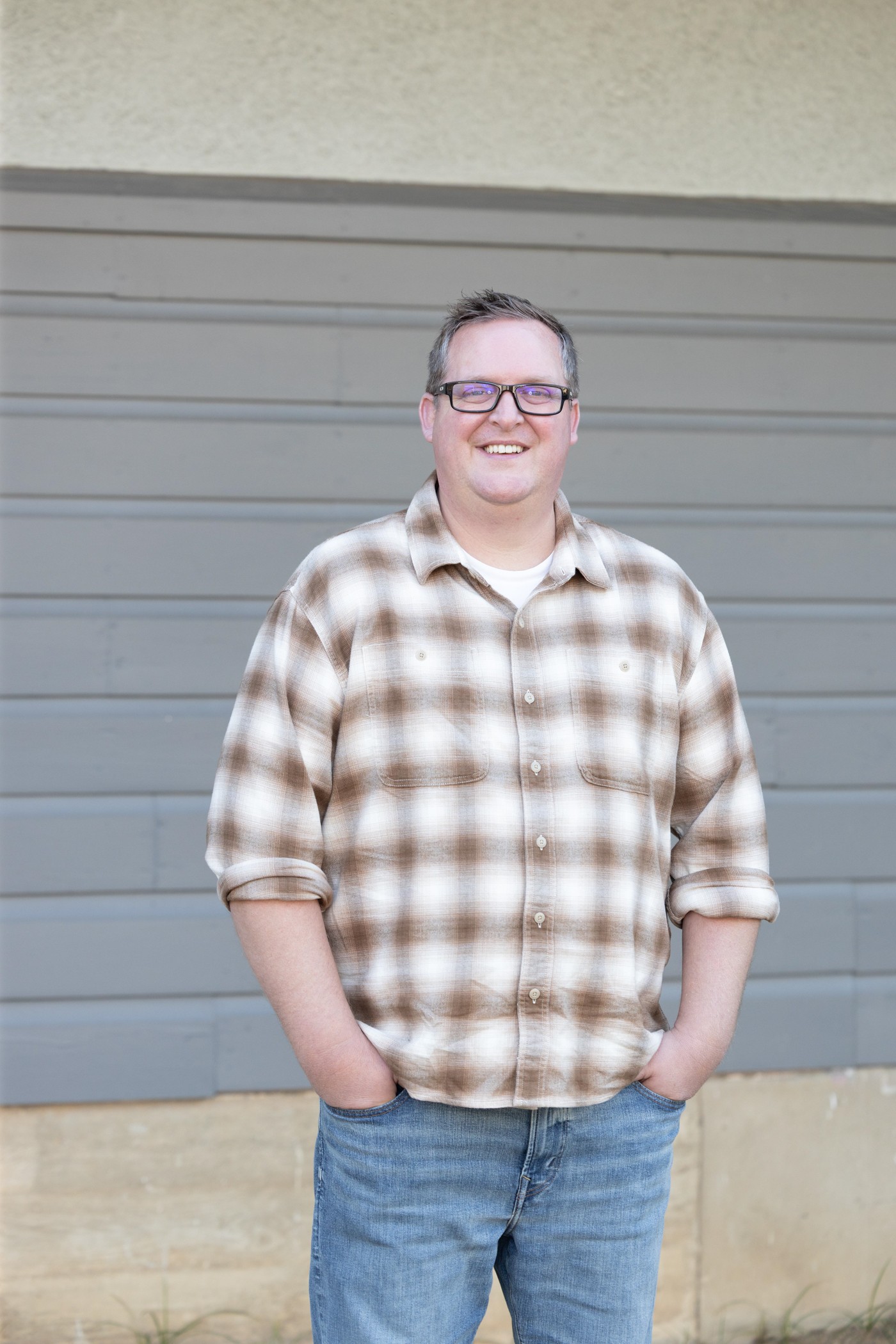
Drew Oakley
Author, Speaker, and Pastor helping families grow in faith and connection.